You love your favorite couch. After all, it’s the one you spent weeks choosing, the one that finally made your living room feel complete. Now imagine a professional painting crew arriving tomorrow morning to transform your walls. That moment of panic you just felt?
That’s exactly why understanding how professional painters protect your belongings matters so much. The difference between a stressful painting project and a smooth one often comes down to protection protocols you never see in the finished photos.
Why Furniture and Floor Protection Is Non-Negotiable
Professional painters know that the quality of their protection work directly impacts both the final results and your peace of mind. When furniture stays properly covered and floors remain pristine, painters can work faster and more confidently. They’re not tiptoeing around expensive rugs or worrying about accidental drips on your hardwood.
The protection phase actually begins before any paint cans open. Experienced painters assess your space, identifying high-risk areas and valuable items that need extra attention. This isn’t just about throwing drop cloths everywhere and hoping for the best. It’s a systematic approach that professional crews have refined over hundreds of projects.
What many homeowners don’t realize is that inadequate protection causes more project delays than almost any other factor. When something gets damaged, everything stops while the issue gets resolved. Professional painters build comprehensive protection into their timeline because they know it saves time overall and protects their reputation.
The Complete Protection Arsenal: What Professionals Actually Use
Walk into a professional painter’s truck and you’ll find a protection toolkit that goes far beyond basic plastic sheeting. Each item serves a specific purpose, chosen through years of experience with what actually works versus what just looks like it might work.
| Protection Material | Primary Use | Why Professionals Choose It |
| Canvas drop cloths | Floors, large furniture | Absorbent, non-slip, reusable, catches drips without spreading |
| Plastic sheeting (6-mil minimum) | Furniture wrapping, moisture barriers | Waterproof protection, conforms to odd shapes |
| Paper/rosin drop cloths | Countertops, light-duty floor protection | Breathable, disposable, good for detail work |
| Painter’s tape (various widths) | Edges, trim, securing plastic | Clean removal, proper adhesion without damage |
| Foam padding | Corners, delicate furniture edges | Prevents tears in plastic covering, protects ornate pieces |
| Cardboard corner guards | Doorways, furniture corners | Prevents impact damage during material movement |
Canvas vs. Plastic: The Heavy Hitters
Canvas drop cloths are the true workhorses of floor protection. Unlike cheap plastic alternatives, which become extreme slip hazards and can transfer wet paint to the bottom of your shoes, heavyweight canvas absorbs drips instantly and stays firmly underfoot. Professional painters typically use 12-ounce or heavier canvas because lighter utility versions don’t provide adequate bleed-through protection.
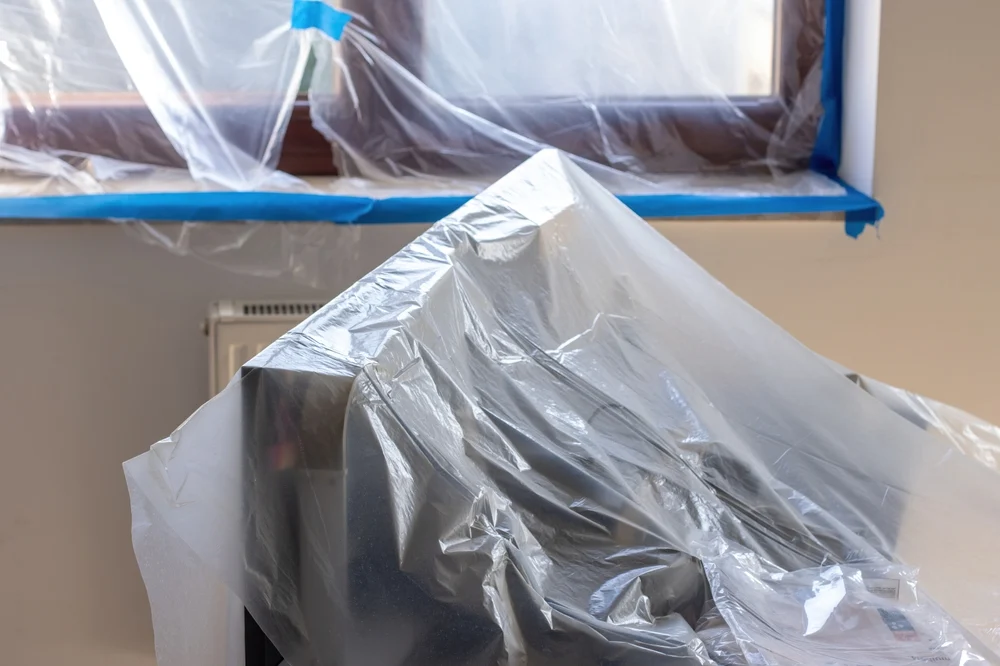
Plastic sheeting serves a different, equally critical purpose. The 6-mil thickness professionals use is thick enough to prevent accidental punctures but flexible enough to drape tightly over furniture of any size or shape. It creates an airtight dust and moisture barrier, making sure that even airborne paint mist cannot settle into your upholstery.
The Room-by-Room Protection Process
Every room in a home presents unique layout challenges, and professional painters adapt their approach accordingly. The process always starts with a walk-through where painters identify what stays, what goes, and what needs custom shielding.
1. Living Rooms and Bedrooms
In living rooms and bedrooms, large furniture pieces typically get moved away from the walls and into the exact center of the room. This creates a clear “work perimeter” around the room’s edges where the vast majority of the painting happens.
- The Clustering Method: The furniture cluster gets wrapped tightly in 6-mil plastic sheeting, like a cocoon.
- The Floor Seal: Special attention is paid to securing the plastic at floor level using painter’s tape so no paint can migrate underneath the bundle.
- The Air Gap: Professionals often elevate grouped furniture slightly using small foam blocks or padding, creating an air gap that prevents moisture from accumulating underneath the plastic coverings during humid weather.
2. Kitchens
Kitchens require entirely different tactics because heavy cabinets, stone countertops, and major appliances cannot move. Here, professionals implement a strict layering system:
- First Layer: Heavy contractor paper is taped down onto countertops to absorb impact and drips.
- Second Layer: Thick plastic sheeting extends from the ceiling down cabinet fronts, completely masking them from roller splatter.
- Appliance Wrap: Stainless steel appliances get individually wrapped in specialized film, and any cabinet hardware gets either removed or meticulously taped off.
3. Bathrooms
Bathrooms present the tightest quarters and the highest density of fragile fixtures. Professionals mask off tubs, showers, toilets, and glass enclosures with custom-cut plastic sheeting secured by moisture-resistant painter’s tape.
Because bathroom painting often involves high humidity from specialized mold-resistant primers and paints, professionals make sure all protection materials are 100% waterproof to prevent chemical or moisture damage to the delicate porcelain or stone finishes below.
What Happens Before Protection Begins: The Removal Phase
The protection phase actually starts with a strategic removal process. Professional painters don’t just protect everything in place because clearing certain items makes the job faster, safer, and produces dramatically cleaner paint lines.
Before the first drop cloth is laid down, the following items should ideally be removed from the room:
Irreplaceable Valuables: Items with significant monetary or sentimental value, such as family heirlooms, fine art, or high-end electronics, should always leave the work zone entirely. No amount of protective plastic is worth the risk.
Small Decorative Items: Lamps, picture frames, knick-knacks, and valuable table decorations get cleared first. These items are easy to knock over and constantly at risk.
Lightweight Furniture: Accent chairs, small side tables, and floor lamps usually get moved to completely unpainted rooms or garage storage. It’s faster and safer than trying to paint around them.
Window Treatments: Curtains, blinds, and valances should be removed entirely. Fabric absorbs airborne odors and paint dust, and painting around them inevitably produces an inferior look along the window casing.
Wall Hardware: Professionals systematically remove all outlet covers, switch plates, and thermostat housings before protection begins, storing the tiny screws in labeled bags so reassembly goes smoothly.
Floor Protection: The Foundation of a Clean Project
Floors take more abuse during a painting project than any other surface. Heavy foot traffic, constant ladder movement, equipment transport, and gravity itself all threaten the integrity of your flooring. Professional painters treat floor protection as the literal foundation of their entire setup.
- Hardwood Floors: Hardwood requires absolute vigilance. Canvas drop cloths must cover every single square inch of exposed surface, with edges overlapping by at least six inches. Professionals tape these overlaps down securely, creating a continuous, non-slip protective barrier. For particularly valuable or exotic hardwood, some painters add a layer of thick contractor paper underneath the canvas for extra insurance against moisture and minor impacts.
- Carpeted Floors: Carpet requires a different strategy. While canvas works well, high-pile or shag carpet can capture paint dust easily. Many professionals use an adhesive-backed carpet protection film that sticks directly to the carpet fibers. This prevents the plastic from bunching up under ladders and creates an impenetrable, waterproof barrier that peels away cleanly without leaving a sticky residue.
- Tile and Vinyl: While these materials handle moisture better than wood, they are highly susceptible to scratches from heavy ladders and dropped tools. Canvas drop cloths provide excellent cushioning, but the key here is securing complete edge coverage. Cleaning dried latex paint out of porous tile grout lines is incredibly tedious and can ruin the look of your floor.
The Small Details That Separate Amateurs from Professionals
Amateur painters and budget contractors often focus only on the big-picture items like the floor and the sofa, completely missing the small details where the majority of property damage incidents actually occur. A premier professional painting company in Lahaska knows that the micro-details require just as much attention as the main room.
Windows and Glass: Glass cleaning after paint exposure is notoriously difficult and risks scratching the panes. Professionals mask window edges with sharp painter’s tape and cover the entire glass surface with plastic or paper shield. This allows them to paint the window trim quickly and confidently, resulting in perfectly crisp, professional lines.
Doorknobs and Hardware: Metal handles and locks are wrapped tightly with plastic or specialized painter’s tape, preventing accidental paint transfer from a painter’s gloved hands.
Light Fixtures and Chandeliers: Fixtures that cannot be easily uninstalled are carefully “bagged” with lightweight plastic sheeting. This keeps the fixture fully protected from airborne paint particles and accidental roller spray while keeping them functional if light is needed during the project.
Protection Removal: The Final Critical Step
How protection materials get removed matters just as much as how they get installed. Rushing this final phase or handling the cleanup carelessly can instantly undo days of immaculate work.
Professional painters always remove protection materials in the exact reverse order of installation, starting with furniture coverings and ending with floor protection. This specific sequence prevents any dust or dried paint chips accumulated on top of the coverings from falling onto your newly painted walls or freshly exposed floors.
- Un-bag Light Fixtures & Hardware
- Fold Furniture Plastic Inward (Trap Dust)
- Pull Painter’s Tape at a 45-Degree Angle
- Roll Floor Canvas Inward (Outside-In)
- Final HEPA Vacuum & Inspection
Painter’s tape removal requires immense patience. Professionals pull the tape at a sharp 45-degree angle, slowly and steadily. This specific technique minimizes the risk of peeling away the edge of your beautiful, fresh paint. They aim to remove the tape when the paint is dry to the touch but not yet fully cured, typically within 24 hours of application, to guarantee those razor-sharp lines.
Finally, floor protection comes off last. Professionals roll or fold canvas drop cloths from the outside in, trapping any paint chips, drywall dust, or debris securely inside the roll. The room receives a final thorough inspection and a vacuum sweep before your furniture is carefully returned to its original position.
What This Means for Your Next Painting Project
Understanding these meticulous professional protection processes changes how you evaluate painting contractors. When you know what thorough, high-end protection actually looks like, you can ask better questions during your initial estimates and immediately recognize when a low-bid contractor is cutting dangerous corners.
The protection phase typically adds several hours, and sometimes an entire day, to a project’s timeline, but those hours prevent property damage that could cost thousands of dollars to repair. Premium painters build protection time directly into their schedules and pricing because they refuse to compromise on quality. If a contractor’s timeline seems impossibly fast, inadequate protection is almost always where they are making up the time.
When hiring a painting company, don’t hesitate to ask specific questions about their safety and preparation protocols:
- What specific materials do you use to protect hardwood vs. carpet?
- How do you handle heavy, unmovable furniture or delicate electronics?
- What is your cleanup and tape-removal process once the walls are painted?
Contractors with detailed, confident answers demonstrate true professionalism. Vague responses or casual assurances that “everything will be fine” should serve as an immediate red flag.
Your Home Deserves Professional Care
When you invest in interior professional painting in Warrington, you aren’t just paying for the flawless application of paint to your walls. You are investing in the complete safety, preparation, and protection infrastructure that makes a worry-free home transformation possible. The hundreds of small decisions a professional crew makes about what to move, what to cover, and how to secure your space add up to the ultimate difference between a chaotic DIY disaster and a smooth, high-end experience.
At Proper Painting LLC, we treat your furniture and floors with the same care we bring to your walls. Our in-depth protection process makes sure your belongings stay pristine while we transform your interior spaces. Reach out to us today and see how meticulous protection makes all the difference.