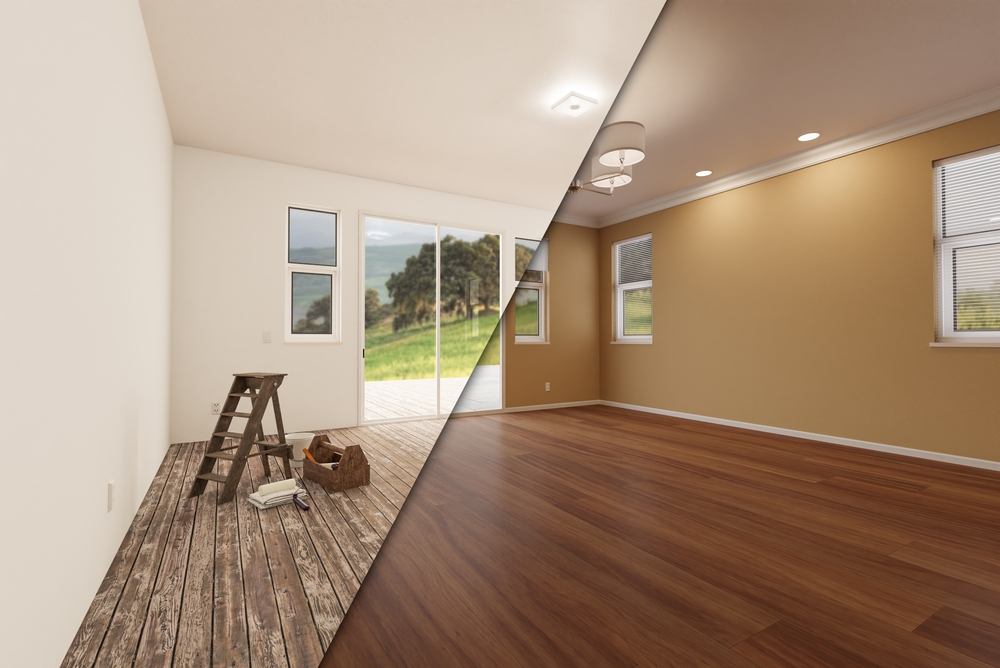

You know that sinking feeling in the paint aisle? You are standing there, staring at two cans of paint that look absolutely identical on the outside, except for one glaring difference: a $30 to $50 price gap per gallon. Your budget-conscious side says to grab the cheaper option, while that nagging voice in the back of your head whispers that you will deeply regret cutting corners down the road.
This is one of the most common dilemmas homeowners face when planning a residential improvement project. It is an honest question that deserves a real, transparent answer: Does expensive paint actually last longer, or is it all just clever marketing hype?
To make an informed decision that protects your property and your wallet, you have to look past the beautiful labels and understand the literal chemistry inside the can.
The Anatomy of Paint Quality: More Than Just Marketing
Why does one gallon of paint cost $25 while another from the exact same brand costs $75 or more? It isn’t just a premium badge; it comes down to the quality and concentration of the raw ingredients.
Liquid paint is essentially a finely balanced mixture of four primary components:
- Pigments: These provide the actual color and the “hide” (the ability to mask whatever color is underneath). High-quality paints use finely ground titanium dioxide, whereas cheap paints use coarser fillers like clay, calcium carbonate, or talc.
- Binders: This is the “glue” that holds the pigments together and adheres them securely to your walls. Premium paints rely on 100% acrylic resins, while economy options use cheaper vinyl or low-grade acrylic blends that break down quickly.
- Solvents: This is the liquid carrier (usually water) that keeps the paint in a fluid state inside the can so it can be rolled or brushed out. Once applied, the solvent evaporates, leaving the binders and pigments behind. Cheap paints are packed with extra solvents (water), meaning less actual protection stays on your wall.
- Additives: These are specialized chemicals that give paint its unique performance traits, such as thickening agents for a smoother flow, mildewcides to stop mold growth, and UV protectants to prevent fading.
When you purchase cheap paint, you are essentially paying for a high volume of water and low-grade fillers. When you purchase premium paint, you are buying a dense concentration of high-grade solids. Once the liquid dries, a premium paint leaves behind a much thicker, more durable, and more flexible protective film than its budget counterpart.
Breaking Down the Three Main Paint Quality Tiers
Paint manufacturers typically organize their products into three distinct quality levels, each designed for different applications and budgets. Understanding these tiers helps you make an informed decision rather than just grabbing whatever’s on sale.
| Paint Tier | Price Range Per Gallon | Best Used For | Expected Lifespan | Coats Typically Needed |
| Economy/Builder Grade | $20-$35 | Low-traffic areas, rental properties, temporary fixes | 3-5 years | 3-4 coats |
| Mid-Grade/Premium | $40-$60 | Most residential rooms, moderate-traffic areas | 7-10 years | 2 coats |
| Professional/Ultra-Premium | $65-$90+ | High-traffic areas, exteriors, kitchens, bathrooms | 12-15 years | 1-2 coats |
Tier 1: Economy or Builder Grade Paint
This is your baseline option. Economy paints are engineered to meet ultra-low budgets for massive commercial builds or quick rental turnarounds. Because they contain fewer pigments and lower-quality binders, they lack opacity. If you are trying to paint over a dark wall with a light color, you will easily find yourself applying three, four, or even five coats just to get a solid finish.
Furthermore, these paints are highly prone to fading, staining, and “burnishing” (where rubbing or cleaning the wall leaves a permanent shiny mark). They are best utilized only when long-term durability is not a priority.
Tier 2: Mid-Grade or Premium Paint
This tier represents the absolute sweet spot for the vast majority of traditional homeowners. Mid-grade paints offer a substantial leap forward in raw durability, color accuracy, and coverage without completely breaking your project budget.
Thanks to a higher concentration of quality resins, these paints roll on smoothly and almost always achieve a uniform, flawless look in exactly two coats. For living rooms, adult bedrooms, and home offices where the walls experience normal, daily contact, mid-grade formulas deliver exceptional value and reliable performance.
Tier 3: Professional or Ultra-Premium Paint
Top-tier paints represent the absolute pinnacle of modern chemical engineering. They feature the highest possible pigment concentrations, premium 100% acrylic binders, and advanced stain-repelling additives.
When executing high-end indoor house painting in Montgomery County, professional teams rely heavily on these lines because they flow beautifully, self-level seamlessly, and are incredibly tough. They are explicitly designed to withstand repeated scrubbing with harsh household cleaners, making them non-negotiable for damp spaces like bathrooms, grease-prone kitchens, and high-abuse entryways.
The Real Cost Analysis: Why Cheap Paint Is Hidden Luxury
Many people assume that choosing an economy paint will save them hundreds of dollars. Let’s run a real-world mathematical comparison to see why the cheapest option on the shelf can actually end up being the most expensive choice you can make.
Imagine you are painting a standard 12×14 bedroom with an existing medium-toned paint on the walls.
Scenario A: The Economy Paint Route
- Material Price: $25 per gallon
- The Reality: Because the paint has low hiding power, it requires 4 coats to fully conceal the old color. To achieve this, you need roughly 2.5 gallons of material.
- Initial Cost: $62.50 in paint materials.
- The Catch: You spend double the hours laboring over the walls, or you pay a professional painter for extended labor hours to keep rolling coat after coat. Within 3 to 5 years, the paint begins to fade, chalk, and look dingy, forcing you to undergo a complete repaint.
Scenario B: The Premium Paint Route
- Material Price: $70 per gallon
- The Reality: Thanks to high-density solid pigments, you achieve rich, uniform coverage in just 2 coats. You only need about 1.5 gallons of paint to finish the entire room.
- Initial Cost: $105.00 in paint materials.
- The Catch: Your upfront material cost is $42.50 higher, but you finish the project in half the time. More importantly, this premium coating is built to flex, resist stains, and hold its vibrant color for 12 years or more.
The Long-Term Comparison
Look at how these numbers play out over a 12-year cycle:
- With Economy Paint, you will have to repaint that bedroom three separate times. Over twelve years, you will spend roughly $187.50 in paint alone, plus you suffer through triple the physical labor, triple the messy cleanup, and triple the disruption to your home life.
- With Premium Paint, you buy the materials exactly once for $105.00, complete the job in a single weekend, and enjoy flawless, beautiful walls for the next decade.
When you look at the big picture, premium paint isn’t an expensive luxury, it is the most cost-effective option available.
What Premium Paint Delivers Beyond Longevity
The benefits of investing in a top-tier paint go far beyond how many years it stays on your wall. High-quality paints deliver tangible user benefits that you will notice from the absolute first stroke of your paint roller.
1. Superior Color Retention
Have you ever noticed how some painted rooms start looking washed-out, yellowed, or dingy after a few years of afternoon sunlight? Cheap pigments break down rapidly when exposed to ultraviolet radiation. Premium paints contain highly stable, UV-resistant pigments that preserve the exact shade, depth, and vibrancy you originally fell in love with.
2. Beautiful Self-Leveling
One of the hallmarks of a cheap DIY paint job is the presence of visible brush strokes, roller tracks, and uneven textures (known as stipple). Premium paints are packed with sophisticated leveling additives. As the paint dries on the wall, these chemicals slow down the drying time just enough to allow the wet paint to flatten out completely, resulting in a perfectly smooth, factory-like professional finish.
3. True Scrubbability and Washability
With low-grade paints, trying to wipe away a muddy fingerprint or a food splatter often rubs the paint right off the drywall, leaving a dull patch or an unsightly shiny spot. Premium paints form a tightly cross-linked resin barrier when they cure. This means you can confidently scrub away marker mishaps, dirt, and kitchen grease with a damp sponge without damaging the finish or changing the sheen.
4. Advanced Moisture and Mildew Resistance
Bathrooms and kitchens are hostile environments for paint. Constant humidity, steam, and direct water splashes will quickly cause lower-grade paints to bubble, peel, and crack, creating a breeding ground for mold. Premium bathroom paints contain powerful antimicrobial additives and dense moisture barriers that lock water out and stop mildew from taking hold.
5. Low-VOC and Zero-VOC Formulations
Cheap paints often release a strong, toxic chemical odor that can linger in your home for weeks after the project is complete. These odors are caused by Volatile Organic Compounds (VOCs). High-end paints are engineered with advanced, eco-friendly chemistry that reduces or completely eliminates VOCs, allowing you to sleep safely in your newly painted room the very same night.
The Critical Danger of Cutting Corners on Exterior Surfaces
While using cheap paint inside your home results in cosmetic frustration, using cheap paint on the exterior of your house can cause a legitimate financial catastrophe.
The exterior of your property is under constant, relentless attack from Mother Nature. It faces blistering summer heat, sub-zero winter freezes, pouring rain, driving winds, and intense UV exposure.
When building materials heat up in the sun, they naturally expand; when they cool down, they contract. Premium exterior paints contain highly elastic binders that allow the paint film to stretch and flex smoothly alongside your home’s siding without cracking.
Cheap exterior paints lack this elasticity. After a season or two of temperature shifts, the brittle paint film cracks and splits open. Once that barrier is breached, rainwater seeps directly behind the paint layer and gets trapped against your home’s raw wood siding. This hidden moisture quickly leads to:
- Widespread wood rot and warped siding panels
- Deep structural mold colonies
- Termite and pest infestations attracted to soft, decaying wood
Repainting your home’s exterior with a premium, weather-resistant coating might cost a bit more upfront, but it acts as a structural shield that can save you tens of thousands of dollars in major carpentry repairs.
How Professional Painters Select Paint for Your Project
Expert painters don’t just pick a can of paint at random based on price alone. They analyze the specific demands, material properties, and environmental stresses of every single room to match the perfect product to the task.
High-Traffic Family Zones
For busy hallways, entry mudrooms, staircases, and children’s playrooms, a professional will almost always specify a high-durability, premium satin or semi-gloss finish. These spaces take a constant beating from scuffs, backpacks, and dirty hands, demanding a paint film that can be washed repeatedly.
Formal Spaces and Guest Areas
For formal dining rooms, adult bedrooms, or ceiling expanses, a mid-grade flat or matte finish is often chosen. These spaces experience very little physical contact, so you don’t need to pay for extreme scrubbability. Instead, a mid-grade paint provides excellent color depth and hides minor drywall imperfections flawlessly.
Commercial Settings
Commercial spaces demand specialized coatings that meet strict local building codes, offer fire-retardant properties, and withstand heavy commercial foot traffic. A qualified painter in Collegeville, PA, will evaluate these exact regulatory and durability requirements to select specialized, industrial-grade coatings that minimize ongoing business maintenance disruption.
The Secret Weapon: Professional Surface Preparation
There is an old saying in the trades that every homeowner should memorize: A paint job is only as good as the surface underneath it.
Even if you go out and buy the most expensive, technologically advanced $100-per-gallon paint on the market, it will absolutely fail, bubble, and peel within a year if it is applied over a dirty, dusty, greasy, or damp wall. This is where hiring an experienced professional team truly saves you money.
Professional painters spend up to 70% of their total project time on rigorous preparation work before a single paint can is ever opened. This vital process includes:
- Deep Cleaning: Removing invisible layers of airborne grease, kitchen oil, dust, and fingerprint residue that prevent paint from bonding.
- Sanding and De-glossing: Scoring older, glossy paint finishes to create a microscopic texture (known as a “profile”) that the new paint can mechanically grab onto.
- Flawless Repairs: Patching drywall cracks, filling structural nail holes, replacing rotted exterior wood, and smoothing out rough spots so the final topcoat looks perfectly uniform.
- Strategic Priming: Utilizing specialized stain-blocking primers to lock away water stains, marker lines, and wood tannins so they cannot bleed through your beautiful new paint colors.
Make the Smart Investment for Your Home
So, does expensive paint really last longer? Yes, without a shadow of a doubt. Premium paints are carefully engineered with superior ingredients that provide exceptional coverage, unmatched durability, and a flawless finish that outlasts economy alternatives by a decade.
You don’t necessarily need to buy the absolute most expensive, top-tier can of paint for every single square inch of your home, but strategically investing in quality where it matters most will save you time, stress, and thousands of dollars over the lifespan of your property.
When you are ready to elevate your home with a stunning finish that is truly built to stand the test of time, partnering with experienced specialists makes sure the job is done right. At Proper Painting LLC, we help our clients navigate these choices every single day. We match the perfect, high-performance paint tiers to your home’s unique architectural needs and apply them with absolute professional precision.
Ready to protect and transform your property with a beautiful finish that lasts? Contact the expert team at Proper Painting LLC today to receive your personalized project quote.