Your deck is an extension of your home, a place for weekend barbecues, morning coffee, and relaxing outdoors. But constant exposure to UV rays, rain, humidity, and temperature swings takes a heavy toll on exposed wood.
When it’s time to protect and restore your deck, homeowners face a classic debate: Should you stain or paint?
While both options protect your wood from rot and weathering, they deliver vastly different looks, lifespans, maintenance requirements, and price points. Here is everything you need to know to choose the right finish for your home.
1. The Key Differences at a Glance
Before diving into details, here is a quick breakdown of how deck stain and deck paint compare across key categories:
| Feature | Deck Staining | Deck Painting |
| Appearance | Highlights natural wood grain & texture | Solid, uniform color; hides imperfections |
| Color Options | Natural wood tones, semi-transparent shades | Unlimited custom colors |
| Lifespan | 2 to 5 years (requires frequent reapplication) | 10+ years (with proper application) |
| Maintenance | Easy touch-ups; cleans and re-coats smoothly | Higher risk of peeling; requires scraping to fix |
| Upfront Cost | Moderate | Higher (requires complete priming system) |
2. All About Deck Staining
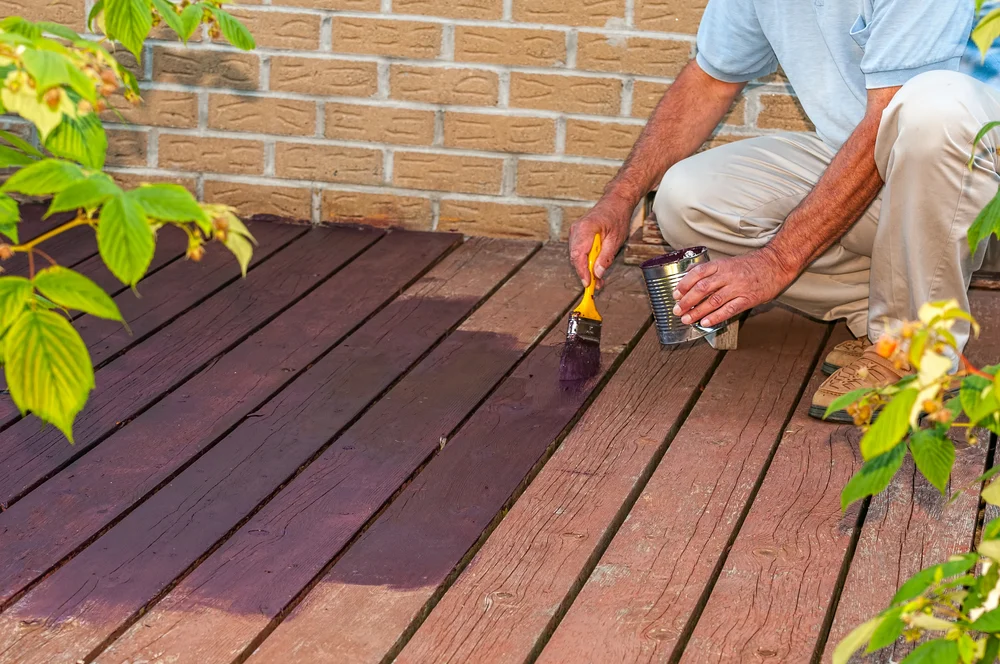
Deck stain penetrates deep into the wood fibers, sealing out moisture while allowing the natural beauty, knots, and grain of the wood to show through.
The Pros:
- Preserves Natural Wood Beauty: Stains range from clear sealers to solid-color stains, but transparent and semi-transparent options show off high-end woods like cedar, redwood, or premium pine.
- Easier Long-Term Maintenance: Stain slowly wears down over time rather than cracking or peeling. When it’s time to re-apply, you typically only need a thorough pressure wash and clean, avoiding aggressive scraping.
- Less Slippery: Because stain absorbs into the wood rather than forming a thick film on top, it maintains the wood’s natural texture, providing better traction when wet.
The Cons:
- Shorter Lifespan: Stains require reapplication every 2 to 4 years to maintain UV protection and prevent wood grey-out.
- Doesn’t Hide Aging Wood: Transparent stains won’t hide cracks, splinters, or previous discoloration on older, worn decks.
3. All About Deck Painting
Deck paint sits on top of the wood, forming a thick, durable shield that seals the surface off completely from the elements.
The Pros:
- Conceals Flaws on Older Decks: If your deck is older, weathered, or severely discolored, high-build acrylic deck paint coats the surface, filling small cracks and hiding imperfections.
- Unlimited Color Choices: Paint allows you to match your deck to your home’s trim, siding, or outdoor living theme (grey, crisp white, dark blue, charcoal, etc.).
- Longer Initial Lifespan: A professionally applied deck paint job with full priming can last 10 years or more before needing a full overhaul.
The Cons:
- Completely Hides the Wood Grain: You lose the natural look and feel of real wood.
- Risk of Peeling: Moisture trapped underneath painted boards will eventually cause the paint to bubble, crack, and peel.
- Harder to Undo: Once you paint a deck, switching back to a natural stain requires labor-intensive chemical stripping or heavy sanding down to bare wood.
4. Local Climate Considerations
Your deck’s lifespan depends heavily on your local weather patterns:
- Harsh Sun & Heat: Strong UV rays break down wood stain dyes faster, requiring clear and semi-transparent stains to be refreshed every 2 years.
- Freezing & Thawing Cycles: Water trapped inside wood grain freezes, expands, and pushes up thick coats of paint, causing peeling deck boards in early spring.
- High Humidity & Rain: Moisture encourages mold, mildew, and rot. Both stain and paint protect wood from water penetration, but a complete oil-based primer under solid finishes is essential in damp environments.
5. Which Option Is Best for Your Deck?
Choose Deck Staining if:
- Your deck is relatively new or built with beautiful wood (Cedar, Redwood, Ipe).
- You love a classic, natural wood appearance.
- You don’t mind light maintenance every couple of years.
Choose Deck Painting if:
- Your deck is older, weathered, or has significant visual flaws.
- You want a specific custom color to match your house.
- You want a thick, protective shell with less frequent re-coating.
Professional Prep Makes all the Difference
Whether you choose stain or paint, 70% of a long-lasting finish depends on prep work. Applying fresh paint or stain over wet, dirty, or decaying wood will cause the coat to fail within months.
At Proper Painting LLC, our deck refinishing process includes deep pressure washing, professional wood sanding, moisture testing, and commercial-grade primers and sealers to make sure your deck looks brand new for years to come.
Restore Your Outdoor Space
If you’re looking for a polished, colorful finish or need to mask imperfections on an older unit, reaching out about deck painting in Quakertown and the surrounding areas might be the more practical solution. Contact Proper Painting LLC today for a deck evaluation and estimate!